


A review of the Uncanny in Black Sabbath's War Pigs
- cagriffithswrites
- Jun 28, 2022
- 5 min read

The Uncanny in Black Sabbath’s War Pigs
Disclaimer: All publicly recognisable music, characters, settings, pictures etc., are the property of their respective owners. The characters and plot are the property of the original author. The author is in no way associated with any media franchise's owners, creators, or producers. No copyright infringement is intended.
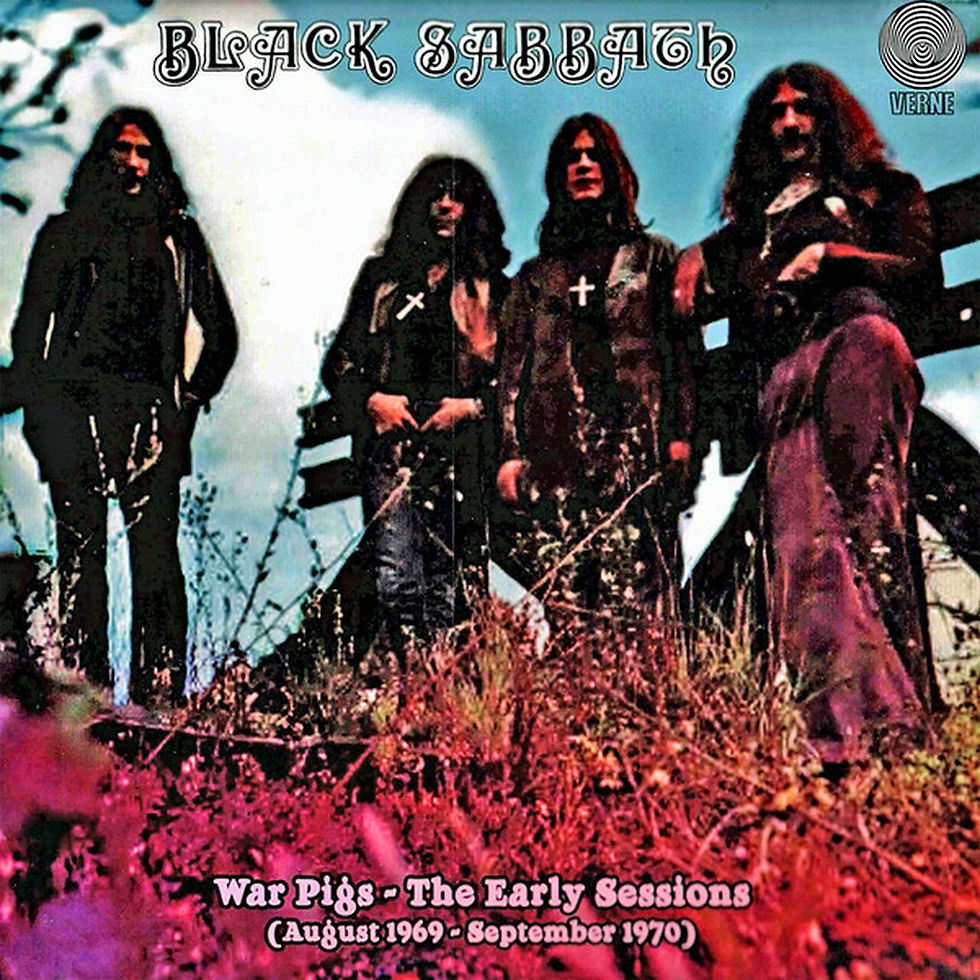
According to Edwards and Monnet, referring to the views of Van Elferen (2012, p.135), music can transcend boundaries and is often used as a precursor to other realities and gothic dualities. The act of crossing boundaries is one of the core factors of Gothic, and music provides a perception of art imitating life, based somewhat on facts or actual events.
Song lyrics can create a believable and immersive Gothic story as easily as an author. For example, in the literary text The Corpse Exhibition by Blasim, we have no idea if the author has experienced the horrors he depicts. It is also unlikely Black Sabbath did either. Still, their ability to create a mirror to humankind and the terrors of war interests us, along with how they portray the abject and the uncanny. We might question how music and lyrics produce a feeling of disorientation, repulsion, and terror when one absorbs the song's messages about war and its dissolution of societal order.
Transgressive heavy metal bands such as Black Sabbath broke through societal norms in the 1970s, creating sounds of dystopian doom and damnation and lyrics filled with insightful social commentary in the wake of the Vietnam war.
Bardine states that when focussing on closely related death metal bands, it is easy to perceive literary characteristics significantly used in gothic and its imagery. He mentions that while these bands may not necessarily set out to write a gothic narrative when creating the lyrics, they somehow compose songs that project satanic elements or the ruinous gloom or foreshadowing one might find in traditional gothic narratives. (2005 P. 572/ 573).
The extreme nature of doom metal as a genre is nothing new in its use in horror movies, and by the 1980s, a gothic style of clothing had become a prominent signifier of the genre, as Edwards and Monnet (2021 p.3) state, based on the work of Goodlad and Biddy,
“Death chic…emaciated whiteness, black clothing, melancholy and imagery associated with death, dying and the undead” (2021 p.3).
Van Elferen (2021 p.6) describes musical hauntology as a distinct disembodied consciousness, prevalent in gothic sound, often used in rites or ceremonial scenes, which provide a ghost-like aspect to the music. She describes these styles as,
“…sonic effects such as reverb and distortion, extremely high or extremely low-pitched melodies, suggestive timbres such as the flageolet or white noise, minor harmonies…” (2021 p.6).
Along with rhythm and tempo, these elements increase a feeling of impermanent mortality that transgresses borders, enabling the listener to lose themselves in the music.
Focussing particularly on Sabbath’s War Pigs - Sabbath being an accepted musical influence of goth subcultures - the dualities between the war in Vietnam and the war machine are many, particularly with atrocities such as the systematic and violent destruction in the village of My Lai,
“American soldiers raped, mutilated, and tortured the villagers before killing them; families were dragged from their homes, thrown into ditches and executed” (Man 2021).
Lyrically powerful, we can see some aspects of the abject and the songs’ ability to disturb the order. It pinpoints bureaucracy and the inhumane ability of those in command to see the poor as pawns in the game of war. The story describes an abject breakdown in meaning, “poisoning their brainwashed minds” (Black Sabbath, 1970). Another example of this can be found in the U.S Army’s testing of 250 chemical agents on military personnel between 1955 and 1975, including psychoactive drugs and tear gas at Edgewood Arsenal (NPR 2021).
Lyrically we are left with a feeling of the uncanny, an inability to distinguish between those in the village of Mai Lai or the soldiers tested upon and their place as victims within the war machine. We question whether these people are automatons described in lyric form or if these incidents happened.
The abject can be found within the lyrics, symbolising the sublime's real, darker side. It states a vast and terrifying world, mentioning the end of days and the usurping of evil warlords who would not be gaining entry to heaven for their crimes.
Conversely, the song by Sabbath is strangely optimistic that this continuation of the war machine will meet a judgement and a conclusion,
“Hand of God has struck the hour…Day of judgement, God is calling. On their knees, the war pigs crawling. Begging mercy for their sins. Satan laughing spreads his wings” (Black Sabbath, 1970).
There is a palpability within the abject whereby the text turns to religion in the face of death when we have lost our identity, either as pawns in the game of war or lost in a never-ending chain of reoccurring conflicts or events. Politically, “Treating people just like pawns in chess” (Sabbath 1970), as Sabbath state, there is an eschatological theory that there will be an end of days and a final judgement by an entity more significant than ourselves who will judge our sins, separating us from the self and the other.
Bibliography
Bardine, B., 2015. Metal and Gothic Literature: Examining the Darker Side of Life and Death. English Faculty Publications [online], 59, 272-580.
Black Sabbath, 1970. War Pigs [video, online]. YouTube. Available from: https://youtu.be/PrZFscfJxXc
Dickerson, C., 2015. Secret World War II Experiments Tested on Troops by Race [online]. NPR. Org. Available from: Secret World War II Chemical Experiments Tested Troops By Race : NPR. [Accessed 6 November 2021].
Edwards, J.D., Monnet, A.S., 2012. The Gothic in Contemporary Literature and Popular Culture – Pop Goth. New York: Routledge.
Man, S., 2021. The Violent Legacies of the U.S War in Vietnam [online]. UC Press Blog. Available from: The Violent Legacies of the U.S. War in Vietnam – UC Press Blog [Accessed 6 November 2021].
Van Elferen, I., 2012. Gothic Music : The Sounds of the Uncanny [online]. Cardiff: University of Wales Press.
Appendix A
War Pigs by Black Sabbath
Generals gathered in their masses Just like witches at black masses Evil minds that plot destruction Sorcerer of death's construction
In the fields, the bodies burning As the war machine keeps turning Death and hatred to mankind Poisoning their brainwashed minds Oh lord, yeah!
Politicians hide themselves away They only started the war Why should they go out to fight? They leave that role to the poor, yeah
Time will tell on their power minds Making war just for fun Treating people just like pawns in chess Wait till their judgement day comes, yeah!
Now in darkness, world stops turning Ashes where their bodies burning No more war pigs have the power Hand of God has struck the hour
Day of judgement, God is calling On their knees, the war pigs crawling Begging mercy for their sins Satan laughing, spreads his wings Oh lord, yeah!

Comments